
On-Site Deliverables - Midlands UK
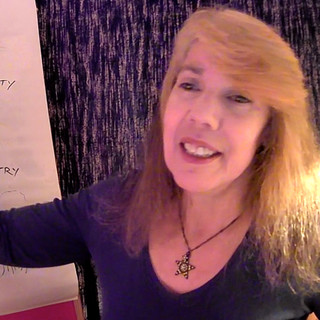
Since starting out 25 years ago on a mission to change lives for industrial companies, I've found that fewer and fewer people offering solutions to disengagement are prepared to venture into the workplace, let alone engage with the shop floor.
When I delivered the first record-breaking programme in 2002, no-one else was doing it in the Midlands. Some London consultants would come on-site at a cost few SMEs could afford... £10,000 for a developmental leg-up considered cheap! Most organisations were believing (and still do) that they had it all in-hand in-house. So even in those days, engagement was a difficult concept to 'sell'.
Much easier to sell is shiny new kit. I know of several organisations who have purchased robotic systems only to find them unusable in their particular environment for whatever reason, meaning thousands of pounds left in a corner to gather dust.
Today, with the advent of AI and familiarity of online communication, the vast majority of employee-development programmes are delivered electronically. Rarely will you find someone prepared to come into your company domain and help you to transform its capabilities from within. Those that do will most likely seek connections with the leadership team, excluding the majority of workers who are most in need of inclusion, trust and purposeful autonomy and who want very much to be part of the process.
Teambuilding days and executive training don't just waste money - they give leading role-holders the feeling that they've achieved change simply by attending. This is extremely damaging as it harbours a sense of 'entitlement to respect' and expectation that others will recognise the elevated status of 'being trained' without tangible actions forthcoming to back up the assertion.
In the engineering sector, the minds that gravitated towards industrial jobs in the first place are perceptive, problem-solving, intuitively practical and capable of advancement. They can readily assimilate new concepts where visible benefits are attached and are often more than willing to involve themselves in driving innovation.
The problem is that budgets and funding are mainly syphoned into machinery upgrades and executive development programmes, while the people that actually do most of the work to ensure the company's ongoing survival are sidelined and expected to perform better than they did yesterday without the impetus inherent in recognition and reward.
My programmes and strategy mechanics address that problem directly, bringing the workforce together in exploring, mapping and implementing continuous improvement to the benefit of the company as a whole. It's not a matter of leading with directives - it's a matter of cohesion within the collective; a shared mission that everyone understands.
Deliverables have to be accessible to everyone if cohesion and collaboration is to be fully restored and practical advancements are to be made sustainable.
Typical issues arising from culture dysfunction are:
Communication blocks and scuttlebutt
Resource/information guarding
Silo mentality
Churn and absenteeism
Disassociation and isolation
Low morale, high stress and general inertia
A dysfunctional culture will be under-performing with many employees doing the minimum for the wage, and high staff churn as people join to discover that they can't function properly under the stress of micro-management, subversive bullying and undeliverable expectations. Those that stay do as little as possible and their mind-set opens a rabbit hole leading to a whole can of worms.
The knock-on effect is a bottomless training-and-recruitment budget, unreliable efficiency, difficulties with just-in-time service and a poor record of customer care. To further compound the problem, people will speak about the company in disparaging terms and even leave negative reviews.
How can I possibly guide everyone out of the rabbit hole and into a safe zone of innovation where performance thrives with pride?
My work catalyses and sustains:
Positive communication
Transparency and trust
Role appreciation and support
Retention and presence through choice
Uptake of responsibility and collaboration
High morale, low stress and general proactivity
An engaged culture is fully functional at all times, for it shares accolades openly and fosters an atmosphere of can-do attitudes. Mistakes are opportunities for continuous improvement and discussion of errors, breakdowns and damages is actively encouraged without remonstration attached. People feel psychologically safe in their working environment and give high-volume discretionary effort to the matters at hand, in productivity and innovation. Every working day brings some measure of joy and people arrive to begin their shift in a positive, proactive frame of mind.
Transformation results in a £4-to-£1 ROI and elimination of many ongoing expenses.
Ideally I like to work within a reasonable travel distance so my catchment stretches from Derbyshire/Nottinghamshire in the north to Northamptonshire/Bedfordshire in the south. Based in the Midlands, there is plenty of scope for industrial divisions to elevate performance along with SMEs.
As you've kindly read this far I'd like to warmly invite you to apply for a free Assessment - a site visit involving a meeting with your team (after our confidential chat) and an unobtrusive shop-floor walkabout from which I'll provide you with an objective report.
I promise complete transparency of findings and an unbiased eye - recommendations may surprise you and there are no strings attached whatsoever.
Talk to me about your story and let's see what we can do about happy endings:


Comments